On average between 2% and 6% of North-American Individuals suffer from the imposing symptoms of Hoarding Disorder. Roughly 1 in 40 Homes is severely hoarded to a point that utilities and exits may not be accessible. Depending on where you live, these statistics are comparable to the percentage of the population that suffer from other (unrelated) conditions such as Alzheimers or ADHD. It has been estimated to cost San Francisco (one of the best documented statistical centers for this condition) $8,000,000 annually to manage and deal with its effects.
So, why don’t we hear about it more? How does it affect individuals and communities at large? What; if anything, can be done to help those suffering from the condition?
In recent years, research into hoarding disorder has been obtaining a bigger picture about exactly how big of a problem it can be and who the condition affects. We are still far from a full understanding but, from our professional experience, it has sad and often tragic outcomes if it isn’t addressed sooner rather than later.
So, what is it?
Hoarding behaviors are present in nearly everyone, everywhere on the globe. It’s only natural to have an urge or will to save or hold on to items that may come in handy or be used to better your situation later down the road. This likely stems from our primal urges for survival. It’s in our nature to build and safely store caches for us to rely on through tough times, exceptional weather events, or things that may be outside of our control. It’s how our country and province was founded after-all. Stores were nowhere nearby so items had to be traded, built, or stored for long periods so that pioneers could survive in the wild. As far back as mankind has existed, even to tribal times, this behavior has been necessary and it continues on into modern day to help us save money or time. It’s a natural behavior to try and efficiently manage resources so that we can better our living situations later on down the road.
We also grow attached to things that are handed down to us such as family heirlooms or things that were once important to someone we loved, possibly a gift.
The behavior appears to operate on more of a spectrum, in our eyes anyway. Of course, our understanding can change as research progresses so we do our best to keep informed of all of the most up-to-date information available. We don’t want to put our foot in our mouth, but it is our current belief that some people have a lot of behaviors, some have very little, but we are all on the scale somewhere.
The problem however, lies when these urges or patterns become incapacitating, illogical, or obsessive. This can lead to collections of waste instead of what would be considered “useful” items, poor mental conditions, physical health deterioration, decreased functioning at work, noticeable decline in one’s ability to care for oneself, or even death. In fact, some cases can become so severe that exposure to mold, animal or human waste, or other bio-hazardous materials can lead to serious medical conditions, physical injury, terminal illness, or result in “piles” literally burying sufferers alive.
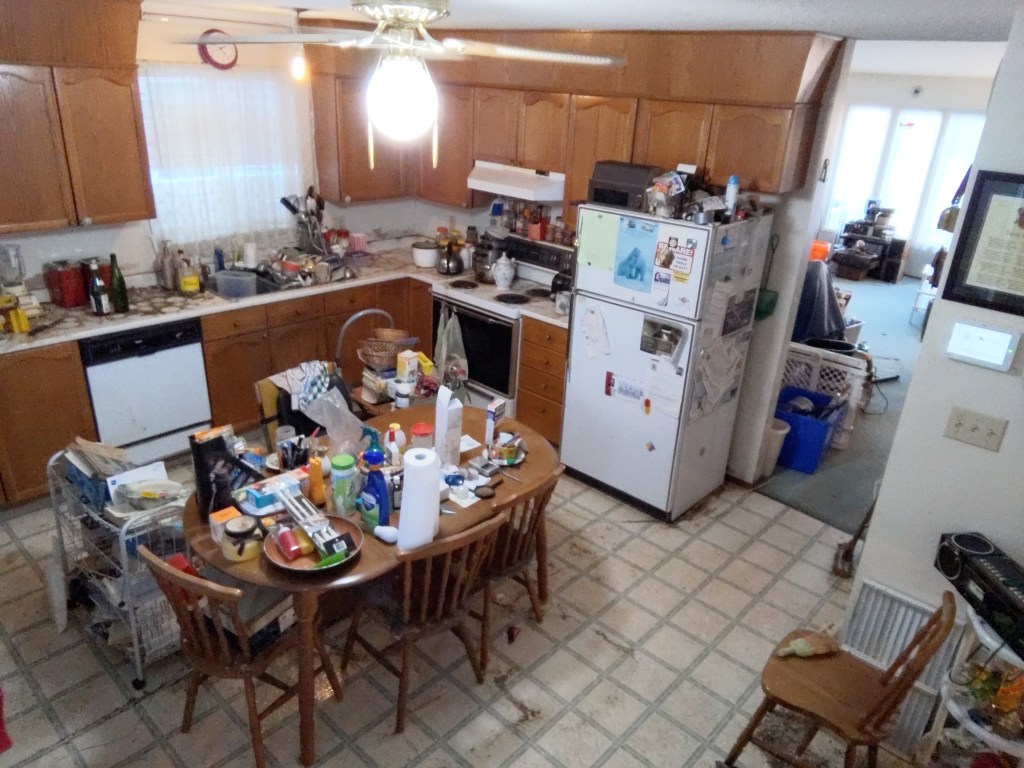
What’s worse is that the living conditions, especially in multi-unit housing, can affect adjacent units and other people’s living spaces. When hoarded spaces become too cluttered, it becomes virtually impossible to keep clean. The clutter sometimes encroaches upon other tenants’ areas and neighboring properties, making them unsightly.
Pests can and do begin to take residence and arrive when items are salvaged and brought home from dumpsters and garbage bins or other uncontrolled locations. Hoarded units can often be attributed to difficult to treat infestations of bed bugs, cockroaches, carpet moths, mice, and other pests simply because there are so many inaccessible places for them to hide and they nest in soft materials such as cardboard and cloth.
Many of these infestations begin to gain access to neighboring properties and attract predators to otherwise safe areas and neighborhoods.
The condition of the living spaces and inability to access specific areas for treatment often makes pest control attempts difficult or virtually impossible to complete, resulting in long drawn-out and expensive treatments for owners and tensions between landlords and various tenants.
So what causes it? Well, that’s complicated. There’s no real “one reason,” unfortunately. It affects many people in many ways. Sometimes it can be quite predictable via genetics and other times it affects people seemingly out of nowhere. One thing we know though, the more people hide it the worse it gets.
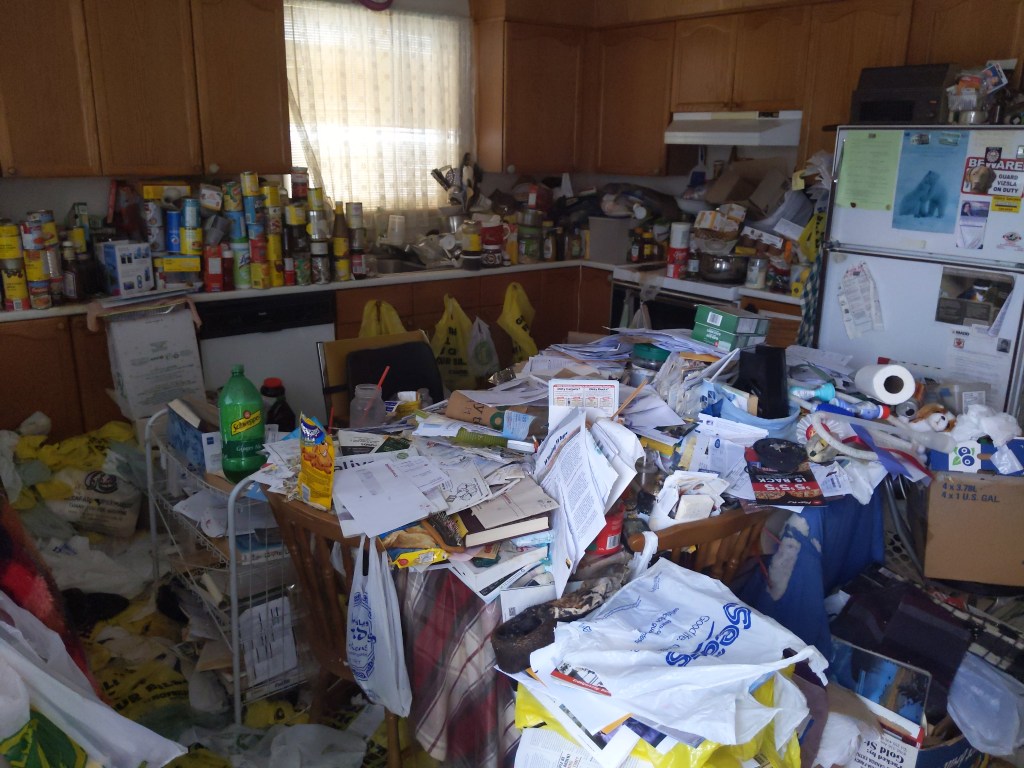
Some patterns we have noticed while working in this industry have been that sufferers often begin by having a passion for certain items or a love of collecting. They have an emotional attachment in some form and an inability to separate from inanimate objects, like giving it away or selling it. The thought often causes symptoms of anxiety or distress. Sometimes the collecting behavior can even be considered obsessive, but often it seems like a person has a relatively harmless interest or collection for a while. Items are displayed for others to see when they visit and rearranged or touched often. Eventually however, a person’s ability to care for, curate, or maintain cleanliness of the items becomes prevalent. Sometimes it’s due to the mobility limitations that age brings on, or it could be because of an unexpected injury or illness, other times it’s triggered by stress, but eventually cleaning and organizing becomes difficult or impossible. Items begin to stack up because the influx of “new arrivals” is not being equalled by the removal of others, this results in an unmanageable “back-up” of things needing to be done.
The person suffering from HD will often spend lots of time “relocating” items from one place to another, attempting to place items with other similar ones or sorting them in accordance to their memories. The person “needs” to see, touch, and move certain items of personal interest and the urge is overwhelming and repetitive. They attempt to reorganize feeling some unseen pressure to do so and it seems to be accompanied by feelings of guilt, frustration, and shame. A circular pattern or routine becomes a daily occurrence, and people rarely break the cycle unless an outside force such as a landlord inspection, injury, maintenance visit, or community complaint takes place.
This condition’s development; and resulting “spiraling”, can be triggered by; or rapidly sped up by, the sufferer experiencing a sudden loss or trauma. It is especially affected by the influx of a large sum of money, often from an inheritance, which accompanies the heightened emotional state. The lack of further obligation to govern one’s spending and the inability to make well-thought-out personal decisions often results in many purchases in short succession. All of the purchases are made with great intentions to do big things, but unfortunately the sufferer has little-to-no ability to follow through with the plans. This results in a massive feeling of failure and a feeling of being completely overwhelmed by the sheer magnitude of difficulties and challenges facing them.
Usually, later in life, the sufferer lives alone and people don’t visit their residence often. They become secretly lonely or angry. They may be well liked in their community or social circle but people likely haven’t seen where the person lives in a very long time. This is a behavior done by the sufferer to avoid being discovered or feeling ashamed of other people’s reactions to their living conditions. Usually choosing to meet at the homes of others or in public places rather than inviting anyone back to their homes to avoid confrontation.
There have been many cases where the disorder also affects families as a whole, or solely one member. Sometimes the living conditions of parents affect children or vice versa. It is not uncommon for cases to involve animal hoarding, body fluid hoarding, and many are accompanied by squalor. In a large portion of the cases, substance abuse or addiction is also playing a role by contributing to the decline of the behaviors.
What we have found so far is that a compassionate and understanding approach has the best effect. People we’ve run into are usually highly intelligent, capable of many great things, and well loved by their friends and family. They genuinely mean well and often have held onto lots of cool things that they intended to give to special people in their lives.
By treating people with kindness, honesty, and offering to help we have found that we can make a big difference in the lives of lots of fantastic people.We take our time, work together, and do what needs to get done as a team in order to get people to a level they are proud of. We help people take back their living spaces so they can get back to enjoying their lives free from any feelings of guilt. We do this by being safe to talk to, by being trustworthy and honest with our clients, and by earning their respect every step along the way.
It also is imperative that the person also seeks professional help through therapy, counselling, or seeking group support such as Clutter’s Anonymous; of which we have no affiliation but plenty of respect.
We will be discussing this condition more in future blog entries, so please check back regularly. Obviously, we are passionate about this topic and have lots of experience. We hope to be able to help educate the public about this condition and help anyone seeking change. We will share our experiences in what helps, stories from some of our favorite clients, and try to shine some light on this topic to raise awareness.
Together, when you choose On-Site Thrift & Tidy, we can clear the way to a better future for you and your loved ones.
Thank you kindly for reading.
 On-Site Thrift
Leave a comment